How Many Amps Does My Home Need? Sizing Your Electrical Panel Correctly
In a world that is growing increasingly electric, 100-amp panels or anything below, are becoming incapable of handling the modern electrical load of today’s homes. If you notice your lights flickering every time a large appliance turns on or perhaps one or multiple breakers frequently tripping, this is a sign your electrical panel is struggling with the current load of electricity required to run your home. Additionally, if you are considering adding on a large electric appliance, such as a heat pump or EV charger, sizing your electrical panel correctly to ensure you will have enough power is vital. We are in a time of transition as people upgrade things like their furnaces and water heaters to electrically-powered systems, and the panels that supported homes forty years ago do not offer the required amperage.
Current Panel Amperage and What Uses Power
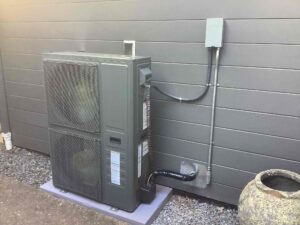
Before planning an electrical panel upgrade, analyze your current electrical load. To find out what amperage rating your panel has, you can open the metal door to your breaker panel and see the number printed on the largest breaker, which is the main breaker for the house. You can also check the panel label pasted on the inside of the door that should tell the amp rating.
The main devices that will have the biggest draw of power are:
- Heat pumps
- EV chargers
- Electric stoves
- Air conditioning
- Clothes dryers
The typical voltage for these circuits is 240.
Sizing Your Electrical Panel With a Load Calculation
When determining how many amps your home needs to function efficiently, a load calculation is the most accurate way to get a clear answer. A load calculation is a process used to measure amps, or total power, your home is drawing in electricity. This can be done by a professional electrician or on your own. The US Electrical Authority notes that a load calculation is usually required to obtain a permit for electrical work. So before getting an EV charger or heat pump installation, a load calculation will be required.
Even if you know you have an older panel, a load calculation is helpful to get a direct look at the amps your home requires rather than making an assumption and moving to a 200 amp panel upgrade when you don’t have to.
Calculating Electrical Load on your Own
You can perform a load calculation on your own with the following steps:
1. Take your home’s total square footage and multiply it by 3 watts per square foot.
2. For each small appliance (kitchen circuits, bathroom circuits, etc.) and laundry circuit, add 1,500 watts.
3. For major or fixed appliances, such as your water heater, stove, dish washer, etc., their watt rating will be on the nameplate. Add these ratings to your calculation.
4. For heating and cooling, don’t count both, since you will not be running both at once at any point. Take the larger rating of the two and add it to the calculation.
5. Add up the total load and then convert to amps by dividing the total by 240 volts.
80% Rule
After you have your total amperage rating, remember to apply the 80% rule, which is the recommendation that you keep your total electrical load below 80% of the total capacity of your panel. For instance, a 200-amp panel is the safe option for a house with a limit of 160 amps. A local electrician can perform the load calculation for you if you are unsure of your own calculations or you’d prefer someone else to handle the process.
Panel Upgrade Options

If you have found that your current panel does not adequately service your current home’s electrical load or won’t service your home’s load in the future if you add on further electrical appliances, you have several options for an electrical panel upgrade.
Load Sharing – You don’t always need a full panel replacement. One option is load sharing, or to have two larger appliances share the same circuit. This can be two EV chargers, a water heater and a dryer, etc. The power can be split between the two appliances or the system can automatically shut down one appliance while the other is running.
Smart Circuit Breakers – Another option to avoid a full panel replacement. Smart circuit breakers automatically shut off secondary circuits if the total demand load crosses the safety thresholds.
Low Charging Current – For EV chargers specifically, you can consider a lower charging current that still meets the equipment requirements. It may take longer to charge your vehicle, but it might help you avoid a full panel upgrade. Make sure the charging time will adequately meet your needs.
Sub-Panels – A sub-panel can be a useful tool if you are having a larger appliance installed that your current panel doesn’t have room for. Sub-panels are a smaller circuit box powered by the main panel that can be placed closer to areas like the garage or basement where larger electrical appliances will be.
Smart Panels – Replacing your traditional breaker panel with a smart device, such as a SPAN panel, can help you with energy savings and load management. Smart panels are able to connect with a mobile app that allows you to see your exact energy usage from each appliance as well as control how much power you are giving to each appliance at certain times. They are also able to integrate with solar and battery backups.
Local Electrical Services in Sonoma and Marin County
Knowing how to handle your home’s amperage can be overwhelming. While it is good to have a foundational knowledge, leaving much of the work to a licensed electrician in your area ensures accurate load calculations and reliable recommendations from a trained expert. John Owens Services has served the Sonoma and Marin County areas with trustworthy electrical work for thirty years. From basic panel inspections, to full upgrades and electric installations, we are the local professionals for the job. We can offer a 200 amp panel upgrade, SPAN panels, and more. If you are feeling unsure about your home’s current electrical load or want to learn more about how you can efficiently manage your electrical appliance usage, get in touch with us today so one of our technicians can assist!
Key Takeaways
- Start by finding out your current panel’s service rating and then calculating the power draw of all your largest appliances
- Follow the steps to perform a load calculation yourself of every electrical appliance in the house, making sure to implement the 80% rule
- Panel upgrade options include load sharing, smart circuit breakers, low charging currents for EV chargers, sub-panels, and smart panels
- A local electrician in Sonoma and Marin County like John Owens Services is your best bet for accurate load calculations and tailor made electrical panel upgrade solutions