Why Your Electrician is the Secret to Slashing Monthly Energy Costs in Marin and Sonoma
California residential electricity rates consistently rank among the highest in the nation. And waiting to address energy inefficiencies in your home is a choice that costs you money every single month.
The “turn off the lights” approach no longer moves the needle the way it once did. Today’s homes run smart TVs, EV chargers, whole-house routers, always-on HVAC systems, and a network of devices that draw power around the clock, whether you’re using them or not. Behavioral habits alone can’t offset the structural inefficiencies built into aging wiring, outdated panels, and mismatched electrical loads.
This is what’s known as the cost of inaction: the invisible drain on your wallet that grows larger the longer problems go unaddressed. However, a professional electrical assessment can identify the specific systems silently inflating your bill.
That’s where a licensed electrician becomes something more than a repair technician. Think of them as an efficiency consultant. Someone who can audit your home’s electrical system, identify the highest-impact upgrades, and help with your electric bill in ways that generic advice never will.
Can Professional Hardware Upgrades Lower My Electric Bill?
If you’re wondering how to lower electric bill costs, professionally installed hardware that works together across your entire home can be a good place to start.
Replacing traditional incandescent bulbs with LED light fixtures reduces lighting energy consumption by up to 75–80%. They also have a much longer lifespan because they convert most of their energy into light rather than heat, reducing large amounts of energy waste. Switching to LED light fixtures can also significantly reduce your carbon footprint, since they are free of hazardous materials, like mercury.
Smart thermostats are another high-return upgrade. They can learn your routine and keep your house at your preferred temperature at different times of the day. With no need for constantly changing the temperature setting manually or cranking the heater or AC to heat or cool the house, these devices can be a fantastic source of energy savings. However, proper installation is important to prevent constant cycling and other energy-wasting issues.
A whole house fan installation offers a low-energy alternative to central AC by moving cooler evening air through the home efficiently without the heavy electrical load of a compressor. This can be a great way to save energy on cooling your house if you don’t want to be running the air conditioner constantly.
Each of these upgrades involves wiring, load calculations, or HVAC integration that calls for a professional, which is where the right technician becomes your most valuable energy-saving tool.
Eliminating Human Error with Advanced Control Systems
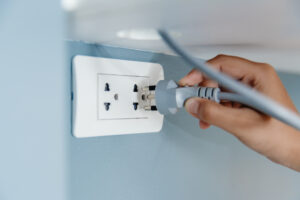
Automation removes the single biggest fear in any electrical equipment: forgetting to turn something off. Smart control systems let your home manage energy consumption on your behalf, delivering consistent savings without relying on anyone’s memory. Before a licensed electrician installs these upgrades, a quick electrical energy audit helps identify exactly where your household is bleeding watts, so every device gets placed where it counts most.
Here’s how professionally installed automation works across three high-impact areas:
- Motion and occupancy sensors for garages and outdoor lighting. Lights that switch off automatically when no one’s present are a simple fix for energy waste. In practice, garage and exterior lights are among the most commonly forgotten, but sensors eliminate that entirely, cutting hours of unnecessary runtime each week.
- Smart switches, digital timers, and dimmers for fans and fixtures. Bathroom exhaust fans left running for hours waste more energy than most homeowners realize. Digital timers shut them down on schedule, while dimmer switches extend bulb life and reduce actual wattage draw.
- Smart EV charger load management for off-peak charging. Electricians can install smart EV chargers that only draw power during off-peak hours, typically 11 PM – 6 AM, significantly lowering fueling costs when PG&E rates drop. For Marin and Sonoma County homeowners with an EV, this single upgrade can offset a meaningful portion of monthly electricity costs.
How Can I Stop Hidden Energy Leaks?
The biggest energy leaks often aren’t appliances; they’re the infrastructure connecting them. Poor connections, overloaded circuits, and an aging panel all create resistance in the line, turning electricity into wasted heat before it ever reaches a light switch. This can make solutions like an energy efficient lighting installation less effective. The phenomenon known as line loss is a real and measurable cost that shows up on your bill every single month.
Dedicated circuits are a practical fix for high energy bills. Large appliances, such as HVAC systems, refrigerators, electric dryers, draw significant current. When they share a line with other loads, voltage fluctuations force motors to work harder and longer, burning more power in the process. Separating those loads onto dedicated circuits is one of the best interventions an electrician can make.
A panel upgrade ensures your home distributes power efficiently to modern appliances and newer installations like whole house fan installation, EV chargers, or smart home systems. Once the infrastructure is clean and balanced, you’re in a much stronger position to take on advanced energy strategies like peak-hour management and battery storage.
How to Get Ahead of Energy Loss
California’s Time-of-Use (TOU) billing structure means the hour you run your dishwasher or charge your EV can matter just as much as how much power it draws.
PG&E’s peak-hour rates can double or triple compared to off-peak windows. They typically spike between 4 p.m. and 9 p.m. on weekdays.
Whole-home energy monitors give you a real-time map of exactly which appliances are pulling power and when. Always-on electronics, such as refrigerators, create a phantom power draw and account for a disproportionate share of monthly charges because they never fully switch off.
Battery storage integration can be achieved with systems that store solar or off-peak grid energy during the day, then supply your home during peak-rate windows, effectively letting you bypass the most expensive hours entirely. Paired with a well-maintained solar array, this approach can meaningfully reduce your grid dependency month over month.
Strategic load shifting, which involves scheduling high-draw appliances to run before 4 p.m. or after 9 p.m., is one of the simplest interventions an electrician can help you automate. And combining that with energy efficient lighting installation throughout your home compounds the savings across every hour of the day.
The Bottom Line: Professional Steps to a Lower Bill
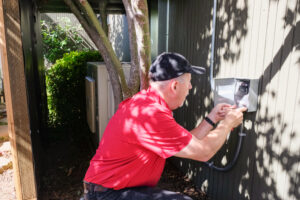
If you’re wondering how to lower electric bill rates, it isn’t about a single fix. It’s a sequence of targeted upgrades that compound over time, and the most effective path to a lower bill combines professional assessment, smart hardware, and ongoing maintenance.
- Schedule a professional energy audit. An outdated electrical panel can create brownout conditions that quietly stress your energy-efficient appliances. An electrician can identify those hot spots before they cost you more than a repair would.
- Upgrade to LED fixtures. This change alone can deliver a 70%+ reduction in energy, and the payback period is often faster than homeowners expect.
- Install smart automation and timers. Phantom power draw from TVs on standby, chargers left plugged in, older HVAC controls, and other “energy vampires” is one of the most overlooked line items on a monthly bill. Timers and smart switches eliminate it automatically.
- Add dedicated circuits for high-draw appliances. Refrigerators, EV chargers, and HVAC equipment run more efficiently and safely when they’re not competing for shared circuit capacity.
- Leverage battery storage for peak-shaving. Bypassing California’s peak-rate windows with stored energy can meaningfully reduce your TOU charges month after month.
Can a Licensed Electrician Help Lower my Energy Bill?
The most reliable path to reduce electricity bill costs isn’t just a light fixture, whole house fan installation, or a full system overhaul, but rather a professional assessment that identifies exactly what’s costing you money.
A failing circuit, a degraded panel connection, or an outdated dimmer switch driving inefficient lighting can quietly inflate your bill for years. The Santa Rosa electricians at John Owens Services Inc. have been serving the Sonoma and Marin County areas for 30 years. We prioritize equipment longevity and cost-efficiency when it comes to providing help with electric bill costs.
Whether it is home rewiring, panel upgrades, installing new light fixtures, or performing an electrical inspection, our technicians make it their goal to ensure your house is as efficient as possible. This includes any plumbing or HVAC installation that requires electrical integration. We can make sure every water heater, AC, or radiant heating system is operating as efficiently as possible to keep energy costs low.
Energy efficiency is also not a one-time project. It’s an ongoing maintenance task: circuits age, usage patterns shift, and California’s TOU rates continue to evolve. Scheduling a regular efficiency review with a licensed electrician is as practical as changing your furnace filter to make sure you are not wasting any unnecessary energy that is adding to your electricity bill.
Ready to stop guessing and start saving? Contact John Owens Services Inc. to schedule an electrical efficiency consultation and get a clear, honest look at where your home’s energy dollars are actually going.