The Reason Your Marin or Sonoma Home Might Need a Panel Upgrade Before Electrification
When your new heat pump or EV charger is ready to go, your electrical panel may not be. The electrical panel is the single physical constraint that determines how much your home can actually do.
The shift away from gas is accelerating across the North Bay, but it’s colliding with a hard reality: most homes built before the 1980s, including Eichler homes, where Eichler home electrical panel capacity is a frequent concern, were wired for a much lighter electrical load. Standard 100-amp or 125-amp panels made perfect sense when gas handled heating, cooking, and water heating. Add a heat pump system and a Level 2 EV charger to that same panel, and you’re pushing equipment well beyond what it was designed to support.
According to ENERGY STAR, most modern electrification projects require evaluating three factors: amperage capacity, physical space, and code compliance. All three can become sticking points before a single new appliance gets installed, particularly EV charger and heat pump electrical requirements.
A proper load calculation often reveals available capacity that hasn’t been accounted for, meaning a targeted solution may cost far less than a full upgrade. Understanding exactly how many amps your home actually needs is the essential starting point.
Calculating the Load: How Many Amps Do You Need to Electrify Your Home?
There are EV charger and heat pump electrical requirements to consider before installation. A whole-home heat pump typically draws 20–60 amps depending on your home’s size and the system’s tonnage. A Level 2 EV charger pulls 40–48 amps on its own dedicated circuit. Add those two loads together and you’re already looking at 60–110 amps before accounting for your kitchen, laundry, water heater, or lighting.
Under NEC Article 220, the legal standard governing residential load calculations, you can only count on 80% of your panel’s rated capacity for continuous loads. That means a 100-amp panel realistically delivers about 80 usable amps, so it is likely insufficient for both a Level 2 charger and a whole-home heat pump running simultaneously.
In practice, most Marin and Sonoma County homes built before the 1980s were wired for a much lighter electrical lifestyle. If you’re planning to add efficient heating and cooling alongside EV charging, a 200-amp panel upgrade is almost always the foundation that makes it work, especially in mid-century homes with unique wiring constraints.
Should I Get an Electrical Panel Upgrade in my Eichler Home?
Eichler homes carry an outsized electrification challenge: original panels that were never designed to accommodate the double-pole breakers that modern loads demand.
If you’re wondering “can my electrical panel handle a heat pump and EV charger,” the answer becomes more complicated when it comes to Eichlers. Those mid-century panels were sized for a world of incandescent lights and small appliances. Add heat pump electrical requirements and you’re often left hunting for two adjacent 240V slots that simply don’t exist in the original panel layout. EV chargers also require 240V double-pole circuits that occupy two adjacent breaker slots.
Radiant floor heating makes this more complicated. Most Eichlers rely on hydronic radiant systems that run on dedicated circuits. When you layer new electric loads on top of an already committed panel, the available capacity shrinks fast.
Slim or tandem breakers are the first workaround many technicians reach for, and they can buy space in the short term. But not all panels accept them safely, and older Eichler hardware often has compatibility limits that make this a band-aid rather than a solution.
That’s exactly why local expertise matters as well as a NEC Article 220 load calculation. A technician familiar with Eichler-era heating systems in Marin understands the wiring conventions and infrastructure constraints that a generalist might miss.
What Are Smart Load Management Devices?
If you’re wondering “can my electrical panel handle a heat pump and EV charger,” there may be different answers depending on your specific situation. Not every Marin or Sonoma homeowner needs a full service upgrade, and recognizing that distinction upfront can save you thousands of dollars before a single permit is pulled.
Smart load management is often the most cost-effective first move. Smart devices can intelligently manage your home’s loads, automatically pausing your EV charger when your heat pump or dryer kicks on, keeping total demand safely within your panel’s rated capacity. This approach lets many homeowners add a Level 2 EV charger and a new heat pump without touching the service entrance at all.
Sub-panels address a different problem: physical space. When your main panel is full of breakers and there’s simply nowhere to land a new double-pole circuit, a sub-panel fed from the main gives you the real estate you need without the cost or complexity of upgrading your utility connection.
Smart panels take this further by replacing the physical copper workaround with software. A panel like Span monitors real-time consumption, prioritizes critical circuits automatically during outages, and lets you turn circuits on or off remotely through an app.
That said, there are situations where a 200-amp upgrade is unavoidable. If your NEC Article 220 load calculation shows that peak demand consistently exceeds your service rating even after load management, or if you’re adding a heat pump system alongside solar and a whole-home battery, the math simply won’t work around a panel constraint. There are also other factors, such as needing a dedicated circuit for heat pump installation, to keep in mind.
Are There Any Tax Credits or Incentives Available?
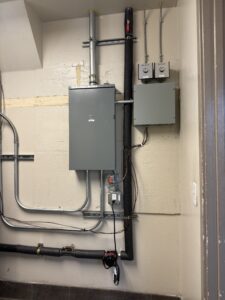
A panel upgrade doesn’t have to be a pure out-of-pocket expense. Federal credits and local rebates can significantly offset the cost for Marin and Sonoma homeowners who plan ahead.
The Inflation Reduction Act’s 25C tax credit covers up to $600 toward a qualifying electrical panel upgrade. Pair that with local utility and county-level rebates for heat pump installations, and you’re stacking savings across multiple programs.
Bundling is where the real ROI lives. If you’re already asking “can my electrical panel handle a heat pump and EV charger,” the answer often leads to a single coordinated upgrade rather than two separate projects. When a heat pump installation is scheduled alongside a panel upgrade, permitting, labor, and scheduling costs consolidate efficiently. Homeowners who bundle these projects typically recoup more value than those who tackle them separately over several years.
There’s also a long-term property value angle worth considering. A 200-amp panel signals to buyers that a home is electrification-ready, a meaningful differentiator in a market where EV ownership and heat pump adoption are both accelerating. Meanwhile, a legacy 100-amp service can quietly suppress appraised value during a resale inspection.
Do I Need a Load Calculation?
Wondering how many amps does an EV charger need? Before you purchase any new equipment, you need a clear picture of your home’s actual electrical capacity. The National Electrical Code requires an upgrade if your total calculated load exceeds 80% of your main breaker’s rating, and most homeowners don’t know where they stand until a licensed electrician runs the numbers.
Here’s what that assessment should cover:
- Panel capacity: A 200-amp panel is the gold standard for full-home electrification, providing enough headroom for a heat pump, EV charger, and other high-draw appliances running simultaneously.
- Dedicated circuit availability: Every heat pump installation requires a dedicated circuit for heat pump operation — typically a 240V breaker pulling 15–50 amps depending on the unit. That slot needs to exist before installation day.
- Physical space: Eichler homes present a unique challenge here. Their original subpanels often lack the physical space for additional 240V breakers, making a specialized assessment critical before you commit to equipment.
- Load management options: Smart load shedding devices can often redistribute existing capacity, bypassing the need for a costly utility service upgrade.
What Electrician in Sonoma and Marin County Can Help With This Work?
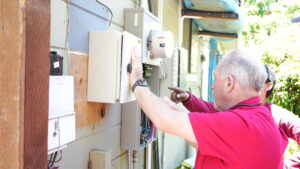
Before you spend a dollar on a new panel or appliance, you deserve a clear-eyed assessment of what your home actually needs. That’s the foundation of how John Owens Services Inc. approaches every job in Marin and Sonoma County.
Understanding questions like how many amps does an EV charger need (typically 40–50 amps for a Level 2 home charger) is just one part of a larger picture. A proper NEC Article 220 load calculation looks at your entire home: existing circuits, planned heat pumps, water heaters, and EV charging loads together. Only then can you make a confident, cost-efficient decision about whether an upgrade is genuinely necessary or whether your current infrastructure can be optimized first.
You will need a trustworthy electrician to help you with these jobs, ensuring they’re performed to perfection. With more than 20,000 satisfied North Bay homeowners and 900+ Google reviews behind our promise of satisfactory work, you’re not taking a chance on an unfamiliar contractor with John Owens. You’re working with a team that has spent decades earning trust in this specific region, with specialized knowledge of Marin and Sonoma County homes, including the unique infrastructure demands of Eichler properties and Eichler home electrical panel capacity.
Schedule a professional load calculation with John Owens Services Inc. to map out your electrification journey on your terms, at your pace, and within your budget.
Key Takeaways
- Load calculations are vital to learning the amount of electricity appliances in your home are using.
- Eichler homes or homes built in the 1980s present unique challenges that require localized expertise when going through the process of electrification.
- Smart load-management techniques can help manage your home’s loads with larger EV charger or heat pump electrical requirements to keep your panel safely within its capacity.
- Tax credits and rebates could be available to you when pursuing an electrical panel upgrade that you can use along with rebates available for other electrical upgrades like heat pumps.
- A licensed electrician is your best bet for running accurate assessments and load calculations that determine your panel’s capacity for further electrification.