How Does My Water Heater Work? Understanding Your Home’s Most Important Utility
When it comes to water heaters, most homeowners don’t think too closely about the mechanics that go into getting that hot water to their showers or faucets. But knowing how this important appliance works is important, especially if you want to know the best maintenance practices to extend your unit’s lifespan and prevent frequent repairs. When considering the best water heater replacement, it is even more important for you to know the different efficiency levels of every available option. Below, we will discuss water heater types pros and cons, as well as how they work to provide hot water in your home.
Conventional Storage Tank Water Heaters
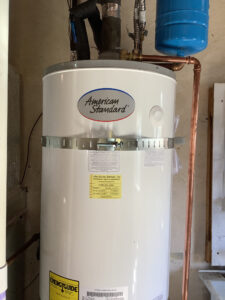
Most homes in the U.S. run on a conventional storage tank water heater, a technology that’s been largely unchanged for decades. Water heater tank systems are usually powered by natural gas, propane, or electricity.
How the System Works
The process starts with the dip tube, a pipe that channels cold incoming water to the bottom of the tank, where it’s heated through heating elements (electric) or a burner assembly (gas). The hot water created then rises to the top of the tank and exits through a separate outlet whenever you open a tap. Gas models add one more component: the draft hood, which vents combustion gases safely outside and prevents dangerous backdrafting into your living space.
The heating cycle runs continuously, keeping stored water at your set temperature around the clock. The thermostat setting of the tank water heater triggers reheating whenever the temperature drops below the setting.
The Standby Loss Problem
Though tank water heaters have a very simple and effective design, there is one reason many homeowners begin exploring other options: conventional tanks typically store 30 to 50 gallons and maintain that temperature 24 hours a day. This includes even the times you are at work, sleeping, or even on vacation, unless you decide to drain the tank while you’re away.
That constant reheating is called standby heat loss, and it quietly inflates your energy bill every single month. A tank water heater is reliable, affordable, and familiar, but it was never designed with energy efficiency as a priority. Starting in 2027, a gas water heater ban will take effect in Marin and Sonoma Counties, meaning they will no longer be installed in homes.
Tank Water Heater Pros and Cons
- ✅ Lower upfront cost compared to tankless water heater install prices
- ✅ Simple installation; compatible with existing home utility setups
- ✅ Handles simultaneous demand well within tank capacity
- ❌ Standby heat loss wastes energy continuously
- ❌ Limited hot water supply within the tank
- ❌ Larger carbon footprint
On-Demand Tankless Water Heaters
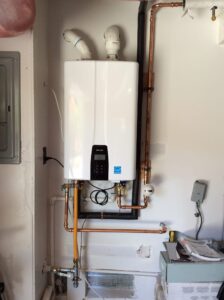
Where a storage tank heater works around the clock to maintain a reservoir of hot water, a tankless unit heats water only when you actually need it. Tankless units can also be powered by electricity, gas, or propane.
How Tankless Systems Work
When you turn on a tap, cold water travels through a heat exchanger inside the unit, where powerful gas burners or electric elements bring it up to temperature almost instantly before sending it straight to your appliances. No tank. No standby heat loss. No waiting for a recovery cycle.
According to the U.S. Department of Energy, tankless water heaters can be up to 34% more energy-efficient than conventional storage tank heaters in homes that use moderate amounts of hot water. A tankless unit’s lifespan can also be up to 20 years or more, making it a highly efficient choice.
What Water Heater Installation Actually Costs (It’s Not Just the Unit)
While a tankless system seems like the better choice, what can give homeowners pause is the cost of the system. Tankless water heater install costs frequently run $1,000–$3,500 total, and sometimes higher. The reason for this is not only the cost of the unit itself but also all of the additional work that typically has to be done alongside it when switching to a tankless system. This includes:
- Larger gas lines to support higher BTU demand
- New venting configurations (dedicated exhaust and air intake pipes)
- Electrical upgrades for electric tankless units
- Permits and labor, which vary significantly by region
Endless Hot Water — With One Catch
The headline benefit of going tankless is obvious: you can’t run out of hot water because the system heats on demand continuously. However, there is a limitation with this. A single tankless unit has a maximum gallons-per-minute (GPM) capacity — typically 7–10 GPM for gas models. Run two showers, a dishwasher, and a washing machine simultaneously, and you may exceed that threshold. Therefore, knowing your peak hot water demand before selecting a unit is essential.
Tankless Water Heater Pros and Cons
- ✅ Long lifespan and strong energy efficiency (saving on utility bills over time)
- ✅ Water heating on demand for convenience and energy savings
- ✅ Compact size saves space
- ❌ High installation costs
- ❌ Additional home upgrades may be required
- ❌ Using many appliances at once could hinder hot water access
Heat Pump (Hybrid) Water Heaters
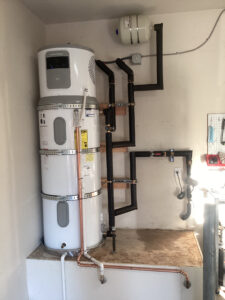
Heat pump technology is the future of home efficiency upgrades. Not only have they revolutionized heating and cooling systems, but they can be used to efficiently heat water for plumbing appliances as well.
How Heat Pump Water Heaters Work
Rather than generating heat directly, a heat pump water heater works like a refrigerator in reverse, pulling in heat from the air outside and transferring it into your home. For water heaters, they transfer the outside heat into the water in your tank. Because the unit moves heat rather than creates it, heat pump water heaters can be two to three times more energy-efficient than standard electric resistance models.
Financial Incentives Worth Knowing
One of the strongest arguments for going with hybrid water heaters right now is the available Federal Tax Credit. Under the Inflation Reduction Act, qualifying heat pump water heaters may be eligible for a credit of up to 30% of the installation cost. That significantly narrows the upfront price gap compared to conventional units. There are also manufacturer rebates and programs from BayREN and Sonoma Clean Power for those in Marin or Sonoma County.
Ideal Environment Checklist
Before committing, confirm your home meets these requirements:
- Space: Approximately 1,000 cubic feet of open air surrounding the unit
- Temperature: An unconditioned but not freezing space (garage, basement, utility room)
- Ventilation: Proper airflow
- Ceiling height: At least 7 feet recommended
For homes that check these boxes, a heat pump unit is arguably the smartest long-term investment available.
Heat Pump Water Heater Pros and Cons
- ✅ Higher efficiency/reduced carbon footprint
- ✅ Large savings on utility bills over time
- ✅ Many financial incentives
- ❌ High initial costs
- ❌ Space and ventilation requirements
- ❌ Climate limitations
Solar Water Heaters
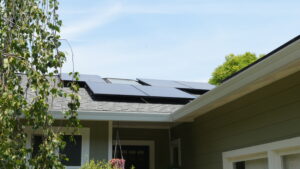
Beyond the three mainstream options covered so far, two specialized technologies are also available. These options are particularly useful if your home has unique fuel access or significant energy consumption.
Solar Water Heaters: Harnessing Free Energy
Solar water heaters use rooftop collectors to absorb heat from sunlight and transfer it to your water supply. According to the Department of Energy, they can cut water heating costs by 50–80%, making them one of the highest long-term ROI options available. They are best-suited for homes in areas with sun-rich climates.
There are two types of systems:
- Active systems use electric pumps to circulate water or heat-transfer fluid, which are more efficient, but more complex
- Passive systems rely on natural convection and gravity, offering lower upfront costs and fewer mechanical parts to maintain
A backup heater is non-negotiable with either system, since cloudy days and high-demand periods mean solar alone can’t reliably cover all needs.
Solar Water Heater Pros and Cons
- ✅ Reduced utility bills
- ✅ Energy independence
- ✅ Long lifespan
- ❌ High investment
- ❌ Space requirements
- ❌ Backup system required due to climate limitations
Condensing Water Heaters: Smarter Gas Usage
If your household runs heavily on natural gas, a condensing unit could be the most practical upgrade. These heaters use a secondary coil to capture hot exhaust gases that standard units simply vent outside, recycling that heat to pre-warm incoming cold water before the primary burner activates.
- Efficiency ratings typically exceed 90 UEF — dramatically higher than conventional tank models
- Most effective in homes already using large-capacity gas systems, where exhaust heat recovery yields the greatest savings
- Higher upfront cost than standard gas units, but lower monthly operating bills offset that over time
- Require proper venting — professional installation is strongly recommended
Which is the Best Water Heater For You?
When trying to decide on the best water heater for your household, it can get overwhelming due to the multiple aspects you need to think about (sizing, space, electrical requirements, water usage, etc.). This is where the professionals come in.
A licensed plumbing contractor, such as John Owens Services, can help you determine which choice is right for you based on factors like budget, household size, and water heating needs. Our trained technicians can assist with every step of the process, from selecting the best installation, to applying for possible rebates.
Professional sizing separates a smart purchase from a costly mistake. Tankless units are rated by GPM (gallons per minute), while tank models use a First Hour Rating. Getting these numbers wrong means either running out of hot water or overspending on capacity you’ll never use. Understanding routine upkeep for your unit is equally important once it’s installed. These are all things that John Owens plumbers are experts in and can help you with throughout the installation process and beyond.
The best water heater is the one that aligns with your household size, budget, and efficiency goals. Consult a licensed plumber, get a proper load calculation, and invest with confidence.