Why Is My Water Heater Leaking?
You go out into the garage and notice water pooling beneath your water heater. This is an issue that calls for immediate attention. Thankfully, you’ve come to the right place for advice on a dripping water heater problem. Here you will find the reasons for a water heater leaking from the bottom, what to do about a hot water tank leaking, when to call a professional, and how to prevent problems in the future.
Why Water is Leaking From Your Water Heater
You’ll rarely take notice of your water heater on a day-to-day basis… only when something goes wrong. But it’s the most important plumbing appliance you have, providing you daily hot water for showers, washing dishes, laundry, etc. So when a water heater leaks and stops working as it should, it can seriously disrupt the flow of your household. Because of this, it’s good to know the reasons behind a water heater leaking so that you can stay ahead of the issue in the future.
Age
Your water heater will eventually reach the end of its lifespan, which is typically around 8-12 years for a traditional gas tank. It will naturally wear down over time, parts will break down, and the tank can become corroded, leading to the water heater leaking from the bottom.
Corrosion
This can be a common reason for a water heater tank leaking. The anode rod, a metal rod that prevents rust from forming in the tank, can become corroded itself. This leads to the corrosion to begin spreading to the tank. This can then lead to a water heater dripping water from the tank.
Loose Connections
Fittings connecting pipes to the unit can become loose from things like temperature changes and the vibration of the unit. When the fittings knock loose, it can lead to water leaking from water heater units.
High Water Pressure
Water pressure that is too high puts an extra amount of pressure on the water heater tank as well as the connections. The water can then be forced out through loose connections or valves from the heavy amount of stress, leading to a leaking water heater.
Faulty Safety Valves
Temperature and pressure relief valves are designed to release water if the pressure or temperature of the tank is too high. But if these valves are malfunctioning, you will notice water dripping from water heater valves.
What to Do When Your Water Heater is Leaking
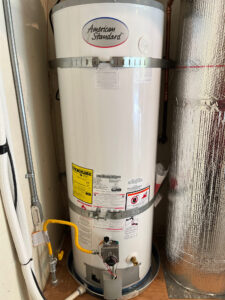
After you notice water leaking from your water heater, you will want to take action right away. Here are the steps to follow:
Before doing anything, turn off the water and power once you notice a water heater leaking. There should be a cold water shutoff valve on top of the water heater you can use to turn off the water being supplied to the unit. Next, you want to shut off power to the unit. If electric, turn off power at the breaker. If gas, turn off the gas valve on the water heater.
The next thing to do is call a plumber if the leak is not something easily fixable, like a loose connection that needs tightening. Water heater leaks can be dangerous and should be handled by a licensed professional to be sure the work is done efficiently and leaves no further issues.
If water is actively leaking from the tank and you can’t get a plumber out to the house right away, the next step is to drain the tank to prevent the water from continuing to leak and cause damage to your home. You can do this by connecting a garden hose to the drain valve and running it into a bucket, a floor drain, or just outside in the yard.
Next, mop up standing water left from the leak to avoid water damage and mold growth. Use towels or a wet vac to remove the water.
Finding the Source of a Water Heater Leaking
A good step to take when dealing with a water heater leaking from the bottom, top, or sides, is to determine the source of the leak.
1) Inspect the water tank
Starting with the tank, you’ll want to check the top and bottom. The top has connections like the cold water inlet and hot water outlet that could be the source of the leak. In this case, they only need tightening. A water heater dripping water from the bottom usually means the tank is corroded and you will need a replacement.
2) Check supply lines
It may be the case that the pipes above your water heater are the actual sources of the leak, rather than the water heater itself. If there is water leaking from water heater supply pipes, it will likely need to be replaced.
3) Look at the valves
Check the temperature and pressure relief valve of a leaking water heater. The temperature and pressure relief valve will be on the top or side of your tank. If you notice either of these leaking, it is best to let a professional handle it right away, since working with this valve can be dangerous. Check the drain valve at the bottom of the tank if your water heater is dripping from the bottom. Things like a build up of sediment (hard minerals that build up in the water tank) or a worn out washer can cause this to leak and it can usually be tightened or replaced individually.
4) Check the discharge pipe
Running down the side of the tank, there is a discharge pipe, which routes water and steam away from the water heater from the temperature and pressure relief valve. Water dripping from water heater discharge pipes could mean that the valve is doing its job, but it can also mean the valve is faulty.
When to Replace a Leaking Water Heater
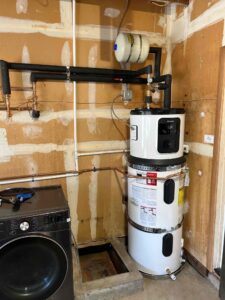
While quick repairs or replacements could be the answer to water heater leaks, there are times when replacing the entire unit is the only safe option.
- A corroded tank always means a replacement is in order
- A tank that is having frequent leaks or repairs would make more sense to replace
- A water heater that has reached the end of its expected lifespan and showing signs of wear and tear should be replaced
Replacing with a new water heater will increase efficiency, lower your utility bills, and be overall more reliable than an outdated unit with frequent issues that cost you in repairs.
How to Prevent Future Water Heater Leaks
A water heater leaking from the bottom is not something you want to have to deal with regularly. Regular maintenance is vital to ensuring your water heater lasts the entirety of its lifespan in great working condition with little repair necessities.
Perform visual inspections regularly on your own. Just a quick glance over your water heater unit every now and then can be extremely helpful, particularly if you also check the valves, water pressure, and temperature settings so you catch any potential issues before they grow out of hand.
Flushing the tank at least once a year is also a great step to add into your water heater maintenance routine to prevent issues. This will help so that sediment does not build up within the tank and reduce the performance of the system. Attach a hose to the drain valve and drain the water into a bucket or out in the yard before refilling the tank again.
Make sure you are replacing the anode rod every few years when it gets corroded so that the corrosion doesn’t spread to the tank.
Schedule an annual inspection with a professional plumber. This is one of the best ways to prevent water heater leaks as well as any other potential issues. A plumber can look over your entire system and address any problems early on before they get out of hand. They can handle things like testing the valves and replacing the anode rod for you.
Professional Water Heater Leak Repair
When it comes to a water heater dripping water, you want a trusted local plumber to be taking care of the repair or replacement for you. John Owens Services has been a trusted local plumber for Sonoma and Marin County homeowners since 1986. Our technicians are licensed and factory-trained in all of the top brands of water heaters. Whether it is a small leak repair or a full tank replacement, we can offer efficient work every time. If you notice water dripping from your water heater, don’t hesitate to reach out right away!
Key Takeaways
- Age, corrosion, loose connections, high water pressure, and faulty valves can all be reasons your water heater is leaking
- Turning off the water and power to the water heater is the first thing you should do, followed by calling a plumber, draining the tank if the leak is causing severe damage, and mopping up all of the standing water
- Look at the tank, pipes, valves, and discharge pipe to find the location of the leak
- You should replace your water heater if the tank is completely corroded, you are having to schedule constant repairs, or the unit has reached the end of its expected lifespan and is showing signs of problems
- You can prevent water leaking from water heater components by regularly inspecting the tank yourself, flushing the tank once a year, changing the anode rod as soon as it becomes corroded, and scheduling a professional maintenance job annually
- John Owens Services is the water heater expert of Sonoma and Marin County with forty years of experience with water heater repair and replacement