Hydro Jetting vs Snaking: Why the ‘Quick Fix’ Might Be Costing You More
A clog that returns within weeks wasn’t truly cleared. If you’ve dealt with a slow shower drain or a backed-up kitchen sink that came roaring back after a service call, you already know this frustration firsthand.
The core question homeowners and property managers in Marin and Sonoma County face isn’t just how to clear a clog, it’s which method actually solves it. This is where the hydro jetting vs snaking debate comes in. A drain snake physically pushes or pulls an obstruction through the pipe. Hydro jetting blasts the entire pipe wall with high-pressure water, removing buildup at the source. One treats the symptom; the other addresses the condition.
North Bay homes, particularly older properties and Eichler builds common throughout Marin, often have aging copper pipes or galvanized pipes, which are coated steel or iron pipes. These pipe materials respond very differently to aggressive interventions. Soil movement in the region due to seismic activity can also stress pipe joints over time, turning a simple clog into a sign of something more structural.
That’s precisely why snaking is often a temporary fix for minor obstructions, while hydro jetting is a long-term maintenance solution. But neither tool is universally correct. If you’ve been wondering can hydro jetting damage pipes or will drain snaking clear up a shower drain clog, the right answer starts with an accurate diagnosis and seeing what’s actually inside your pipes before choosing a method is what separates a lasting repair from a recurring bill.
When to Use a Drain Snake: The Emergency Bandage
A drain snake is the right tool when you need fast, targeted relief and not a whole-system overhaul. Also called a drain auger, it works by physically pushing or pulling a localized clog through the pipe. There’s no pressure, no chemical reaction; just mechanical displacement.
A snake solves the problem in front of you, but it doesn’t address what’s coating the pipe walls behind it. That distinction matters a lot, especially for older homes. Snaking is the preferred “gentle” option for aging or corroded galvanized steel pipes, a material common in Marin County homes built before the 1970s. Aggressive pressure on those pipes can cause more damage than the clog itself.
Best use cases for snaking:
- Hair-bound shower drains — a classic localized clog that an auger handles cleanly
- Toilet paper blockages — soft material that responds well to physical displacement
- Quick-response situations — when you need to clear a backup today, not tomorrow
- Fragile or aging pipe systems — where pipe integrity outweighs a deep clean
The practical limitation is residue. A snake punches through grease, soap buildup, and organic matter but leaves a film behind on the pipe walls. Over time, that residue accumulates again, which explains why many homeowners searching for how to clear main sewer line clogs find themselves back at square one within months.
For isolated, single-fixture clogs, snaking is a sensible, cost-effective first response. But when the issue is recurring or affects your main line, a more thorough approach is worth considering, such as hydro jetting tree roots or large amounts of grease buildup.
What Does Hydro Jetting Do for My Drains?
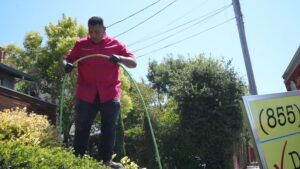
Hydro jetting doesn’t just punch a hole through a clog. It scrubs the entire pipe wall clean, restoring flow from edge to edge.
While a drain snake moves debris out of the way, hydro jetting is a method that uses pressurized water — ranging between 1,500 and 4,000 PSI — to clean away grease, dissolve mineral buildup, and flush every last bit of residue downstream. Think of it as the difference between poking a hole through a grease-coated pipe and pressure-washing the interior until it looks close to new. That “like new” effect means you’re restoring the pipe’s full diameter, not just carving a narrow channel through the blockage.
Kitchen drain lines and main sewer stacks benefit most from this approach. Years of grease, soap scum, and food particles bond to pipe walls in layers that a snake simply can’t address. Hydro jetting reaches those layers and keeps them from rebuilding quickly, solving recurring clogs that snaking only postpones.
A common concern homeowners raise is: can hydro jetting damage pipes? It’s a fair question. The risk is minimal when a licensed technician calibrates the pressure to match your pipe material and condition. Older or compromised lines may warrant a camera inspection first, a step John Owens Services Inc. recommends before any jetting service or any decision on drain cleaning methods. Proper pressure regulation protects your plumbing while still delivering a thorough clean.
Do I Have Tree Roots in My Drains?
Is hydro jetting worth it when it comes to root intrusion, the act of tree roots infiltrating your pipeline and causing massive blockages? Tree roots are one of the most aggressive underestimated threats to sewer lines in Sonoma County. The region’s mature oaks, redwoods, and ornamental plantings create a beautiful landscape, but their root systems relentlessly seek out moisture. That search leads them straight into the hairline cracks and joints of aging underground pipes.
A snake can punch through a root mass and restore partial flow, but it leaves the root structure intact inside the pipe. Within weeks or months, those same roots regrow, often thicker than before.
Hydro jetting tree roots is a fundamentally different approach. The high-pressure water stream doesn’t just cut through root masses; it strips the pipe wall clean, removing the residual organic material that roots anchor to. That clean surface is then a far better candidate for permanent solutions like root-barrier treatments or pipe lining.
Eichler Owner Alert: If your Sonoma County Eichler home has original copper or galvanized slab lines running beneath the radiant heat system, aggressive hydro jetting requires extra caution. High-pressure water applied to already-corroded or compromised pipe walls can cause failures that are difficult and costly to access beneath a concrete slab. A professional assessment should always precede any high-pressure work in these homes.
Should I Get a Video Pipe Inspection?

If you’re wondering how to clear main sewer line clogs or any type of drain clog in your home, the task always has to start with an inspection. Skipping a pipe inspection before any drain service is one of the most expensive shortcuts a homeowner can make. When a technician goes in blind, they’re making assumptions about pipe condition, clog composition, and line integrity. A snake might coil against a collapsed section. High-pressure jetting might tear through a hairline crack and turn a manageable repair into a full line replacement.
Video inspection does three things no other step can:
- Identifies the actual problem — grease, roots, crack, or collapse — before any tool touches it.
- Guides method selection — only pay for the power you actually need, not the most aggressive option available.
- Provides before-and-after proof that the job was completed correctly and the line is clear.
That last point matters more than most homeowners realize. Without camera confirmation, there’s no way to verify that jetting fully cleared a root intrusion or that snaking didn’t just punch through a soft blockage temporarily.
Hydro Jetting vs Snaking: Key Takeaways
- Choose snaking when you’re dealing with a single-fixture clog, older clay or cast-iron pipes that could be stressed by high-pressure water, or a situation where you need a fast emergency clear. A plumbing snake will work best for isolated, soft blockages that haven’t had months to harden.
- Choose hydro jetting when you’re facing a recurring main line backup, heavy grease accumulation, or tree root intrusion. As the industry standard for clearing the entire diameter of a main sewer line, hydro jetting doesn’t just punch a hole through the clog; it cleans your entire drain wall to wall.
- The cost reality is this: jetting carries a higher upfront price, but it interrupts the cycle of scheduling a snake every six months. Over two to three years, that math favors a single thorough clean.
- Camera inspection is crucial before making a decision. Aging Eichler radiant systems, mature oak root networks, and mixed-era pipe materials mean a one-size-fits-all approach rarely holds for North Bay homeowners. If you’re wondering can hydro jetting damage pipes, the answer won’t be clear until a video inspection is performed.
Which Sewer and Drain Cleaning Company Near Me Should I Choose?
Whether you’ve been wondering is hydro jetting worth it or trying to decide if a simple snake will do the job, the honest answer is: it depends on what’s actually happening inside your pipes. For the drain cleaning technicians at John Owens Services, recommending the right method starts with seeing the problem clearly, not guessing at it. From hydro jetting tree roots to snaking large clogs out of sink drains, we have the tools to effectively complete any drain job and leave you with clear flowing plumbing.
Equipment longevity and cost-efficiency go hand in hand. A snap decision to blast aging pipes with high-pressure water, or to snake a line that’s packed with years of grease buildup, can turn a manageable repair into a costly replacement. That commitment to accurate work is why John Owens Services Inc. has built a track record with over 20,000 satisfied homeowners across the North Bay. We believe honest work is a standard, not a selling point.
If you’re stuck in a clog cycle that keeps coming back, schedule a video pipe inspection with John Owens Services Inc. and get a clear picture of what your drains actually need.