Signs Your Sewer Line Is Collapsing vs Just Clogged
Recurring drain backups that clear after snaking then return within days or weeks are one of the most misread warning signs homeowners face. A clog and a collapsed sewer line behave very differently, and treating one like the other can end up costing you.
The “snake, clear, repeat” cycle is a financial drain that can run into hundreds of dollars before anyone asks the right question. A true blockage from grease, paper, or debris stays localized. Clear it once and it’s gone. But when a line has structurally failed, a snake passes through the compromised section and creates only temporary relief before it backs up again within days or weeks.
North Bay homes built between 1950 and 1980 carry a specific vulnerability here. Much of the residential pipe infrastructure in Marin and Sonoma County from that era was installed with clay or Orangeburg pipe, materials that degrade, shift with soil movement, and collapse under pressure over decades.
The sections ahead will walk you through the internal and external collapsed sewer line symptoms.
What are the Signs of a Collapsed Sewer Line?
Collapsed sewer line symptoms don’t stay hidden for long, and the most alarming ones play out inside your home, across multiple fixtures, all at once.
The clearest warning sign is what plumbers call a “Total Home Backup”: you flush the toilet, and water bubbles up into the shower or bathtub. This happens because wastewater has nowhere to go. When the main line is blocked or structurally compromised, pressure forces sewage backward through the path of least resistance, which is almost always a low-lying drain nearby. A single clogged fixture won’t do this. A failed main line will.
Gurgling sounds traveling across multiple rooms are another sign of sewer line issues that deserves your attention. That sound is trapped air being displaced as wastewater struggles to move through a line that’s shifted, cracked, or partially collapsed. If you hear it in the bathroom when the kitchen sink drains, or vice versa, it’s the plumbing system signaling a structural problem, not a localized blockage.
Running your dishwasher or washing machine when the main line is already compromised can push that tipping point into a full sewage backup inside your home. These appliances discharge a high volume of water rapidly, and a damaged main line simply can’t handle the surge.
And if you’ve noticed an uptick in rats or cockroaches, don’t dismiss it as a seasonal nuisance. Sewer roaches are drawn to the moisture and will use pipes as a pathway into your home. A breached pipe wall creates a direct opening into your home’s infrastructure and pests use broken sewer lines as a highway straight into your walls.
Can There be Signs of a Sewer Collapse in Your Yard?
If you know what to look for, your yard can reveal long before a single drain inside your home shows any trouble and the cost to replace sewer line damage becomes expensive.
Unusually lush, green patches of grass are one of the clearest outdoor signals. Sewage acts as a fertilizer, so when a pipe leaks or collapses beneath the surface, the escaping waste feeds the surrounding soil. You’ll notice a strip of turf that’s noticeably darker and thicker than the rest of your lawn and stays that way even during dry stretches when everything else looks parched.
Sinkholes and surface indentations along the path of your sewer line are equally serious. When a pipe fails, the surrounding soil gradually loses its structural support and begins to shift downward. What starts as a subtle soft spot can develop into a visible depression or an actual sinkhole near your foundation or yard. A good indicator of pipes collapsing is ground movement right above a sewer path.
Pay attention to your driveway and paved areas, too. Pavers and concrete slabs that suddenly begin to settle, crack, or heave near where your sewer line runs aren’t from normal wear. It means the ground beneath them is shifting as soil washes into a compromised pipe.
Also, if a persistent rotten egg odor lingers in your yard despite no obvious source, that sulfur smell is escaping sewer gas that no amount of cleaning or landscaping will resolve.
How Drain Snaking Can Help Diagnose Your Sewer Line
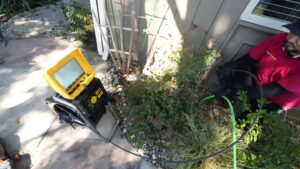
A drain snake doesn’t just clear clogs, It can also deliver a diagnosis that reveals whether sewer line repair is what you actually need.
When a drain cleaning technician pulls the cable and finds mud, clay, or small rocks clinging to the head, that’s not a coincidence. This means the pipe has likely breached and soil is entering, meaning the surrounding ground has pushed through a crack or collapse point.
Resistance during snaking is another signal worth taking seriously. A clog yields and breaks apart. A pipe that’s crushed flat under soil pressure or root intrusion pushes back differently. Technicians describe it as hitting a dead end that won’t give, no matter the force applied.
Using chemical drain cleaners to treat the problem is where many homeowners make a costly mistake. On already-compromised pipe walls, harsh chemicals accelerate deterioration rather than solve anything. They can soften weakened material and widen existing cracks.
Clearing a line is not the same as fixing it. A successful snake-through might restore temporary flow, but if the pipe wall is fractured or partially collapsed, the backup will return. That temporary relief can actually delay the proper inspection and repair your home needs. When there is a full collapse, you need help from drain professionals, and solutions such as trenchless sewer line replacement are needed.
Can Different Pipe Materials Cause Problems?
Homes built before 1980 carry a hidden infrastructure risk that makes recurring backups far more serious than a simple clog.
Orangeburg pipe is the most urgent failure mode. These pipes were made from ground wood fibers and liquified coal tar pitch. This bituminized fiber material, installed widely through the postwar building boom, eventually flattens and deforms like a wet toilet paper roll as decades of moisture and soil pressure take their toll. Once that happens, no amount of snaking restores normal flow. The pipe itself has become the obstruction.
Cast iron presents a different but equally serious problem. In older homes, cast iron lines corrode from the bottom up, a pattern called channeling, where the invert (the pipe’s lowest point) erodes into a shallow trough that traps solids and breeds recurring blockages. From the outside, the pipe looks intact. Inside, it’s failing.
Eichler homeowners face a compounding challenge. Many Eichler sewer laterals run beneath the radiant heat slab, which means accessing them requires breaking through concrete. That access complexity directly affects the cost to replace sewer line, since slab work adds both labor time and material expense that standard open-trench jobs don’t encounter.
If your home was built before 1980, the pipe material under your yard may be decades past its service life. That context matters before you can accurately assess whether what you’re seeing is a clog or the early warning of a collapse. This is where you would need a no-dig sewer line replacement.
The Bottom Line: Clog vs. Collapse Comparison
Clogs isolate, whereas collapses escalate. A true clog typically affects one fixture, like a single slow drain or a backed-up toilet. A collapsed line causes total home backups, meaning multiple fixtures fail at once because waste has nowhere to go. If your kitchen sink, shower, and washing machine are all backing up simultaneously, that’s not a clog, that’s a structural problem.
Recurrence is the defining tell. A properly snaked clog stays clear. A collapsed or severely damaged line comes back within days, sometimes hours, because the physical obstruction, the cave-in itself, never left. And when a plumber pulls the snake back covered in mud or soil, that’s the smoking gun for a collapsed sewer line: ground material shouldn’t be inside your pipe at all.
Yard indentations and persistent sewage odors outdoors are equally definitive. These signs confirm that waste is escaping the pipe and saturating surrounding soil. At that point, the conversation shifts from drain cleaning to either sewer line repair or trenchless sewer line replacement, depending on the extent of the damage.
The Local Plumber Who Can Diagnose Your Clogged Drain
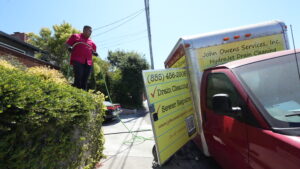
If you’re seeing signs of collapsed sewer line symptoms, the most important step you can take before authorizing any sewer work is a professional camera inspection. A licensed technician runs a small camera through your line and documents exactly what’s happening: a grease clog, root intrusion, a partial collapse, or a full structural failure. That footage removes the guesswork and ensures you’re only paying for the work your pipe actually needs. Skipping the inspection and going straight to replacement is how homeowners overspend by thousands.
Once the camera confirms structural damage, no-dig sewer line replacement becomes a genuinely valuable option for most Marin and Sonoma County properties. Trenchless repair corrects the problem from inside the pipe with no torn-up lawns, no destroyed driveways, no uprooted mature landscaping that took decades to grow. For Eichler homeowners and property managers protecting curb appeal and property value, that distinction matters.
John Owens Services Inc. applies a ‘Repair First’ philosophy to every North Bay plumbing diagnostic. When it comes to sewer and drain services, we are the Marin and Sonoma County experts. Since we are dedicated to finding repair solutions over immediate replacement, we take the time to perform a full sewer inspection with high-quality sewer cameras before jumping into a replacement recommendation. If a replacement is necessary, we can help with trenchless sewer line replacement so that you don’t have to worry about a collapsed sewer ruining your home.
Don’t wait until a sinkhole forms in your yard or a backup floods your floor. Schedule a sewer line diagnostic inspection with John Owens Services Inc. and get a clear picture of what’s actually happening underground.